
🔗 Abacus and the Chaining Technique for Remembering Sequences
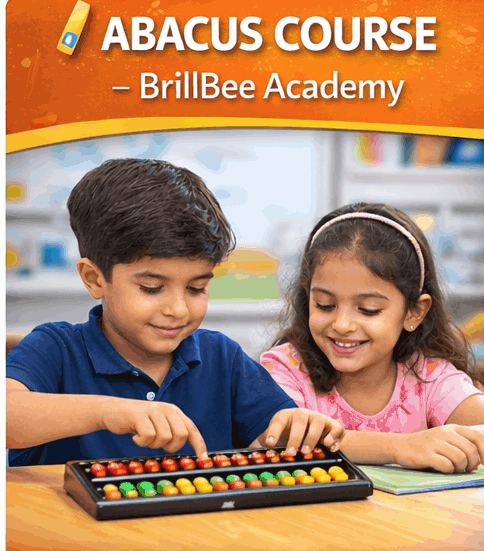
One bead leads to the next — like a story
Does your child remember isolated facts but forget the order of events or steps?
The chaining technique links items together in a story or image chain. Abacus sequences (bead movements) are natural chains.
Here’s the promise: You’ll learn how to remember any sequence using stories.
Director & Lead Abacus Trainer | Mission Abacus Pvt. Ltd.
10+ years experience | 5000+ students & teachers trained
📍 Mission Abacus Pvt. Ltd. — Jaipur, India
🌐 Website: missionabacus.in
📞 WhatsApp: +91 96641 11853
🧩 How Chaining Works
Isolated facts are hard to remember. A chain links each fact to the next, creating a path. Pull one, and the rest follow. Abacus bead movements are a physical example.

🎯 How to Use Chaining
Step 1: List the items in order. Step 2: Create a vivid image connecting item 1 to item 2. Step 3: Connect item 2 to item 3. Step 4: Continue. Step 5: Mentally walk through the chain. For abacus: each bead movement is a step. For history: connect events with action images. The sillier, the better.
💡 A Parent’s Example
“My son needed to remember the order of planets. We made a story: Mercury (a thermometer) melted on Venus (a woman), who threw it at Earth (a globe), which crashed into Mars (a Mars bar). He never forgot the order.”
You might wonder, “Does this work for long lists?” Yes — break into smaller chains, then link the chains.
❓ FAQ — Chaining Technique
How do I practice at home?
Give a 5‑item list. Child creates a story linking them. Test recall after 10 minutes.
What if my child can’t make a story?
Start with 2 items. Then add a third. Build gradually.
Does this work for math formulas?
Yes — chain the steps of the formula with images.
Can online abacus help?
Yes — use it to practice sequencing first, then apply chaining.
What’s a good goal?
Remembering a 10‑item list using a story after 1 reading.
How long to learn?
1-2 weeks.
What’s the most important message?
“Turn lists into stories — your brain loves stories.”
✨ Turn sequences into unforgettable stories.
Abacus teaches the power of chains.
📲 Book a chaining technique demo →Limited seats
Director & Lead Abacus Trainer | Mission Abacus Pvt. Ltd.
10+ years experience | 5000+ students & teachers trained
📍 Mission Abacus Pvt. Ltd. — Jaipur, India
🌐 Website: missionabacus.in
📞 WhatsApp: +91 96641 11853