🗣️ Abacus and the Phonological Loop: Connecting Math to Language Processing
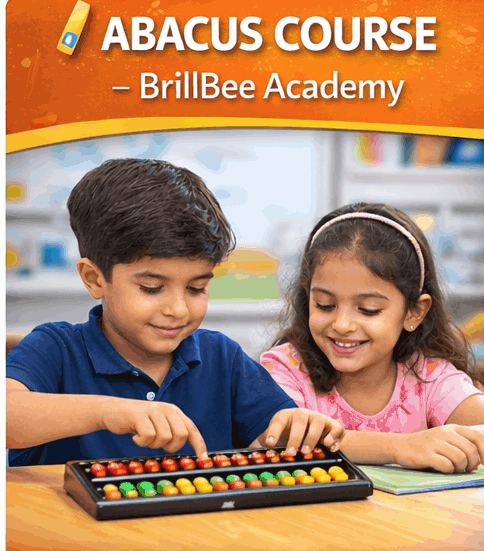
Counting aloud trains the brain’s language memory
Does your child struggle to remember spoken instructions or repeat back words?
The phonological loop is the part of working memory that handles verbal information. Abacus trains it through counting and number dictation.
Here’s the promise: You’ll learn how abacus strengthens language memory.
Director & Lead Abacus Trainer | Mission Abacus Pvt. Ltd.
10+ years experience | 5000+ students & teachers trained
📍 Mission Abacus Pvt. Ltd. — Jaipur, India
🌐 Website: missionabacus.in
📞 WhatsApp: +91 96641 11853
🧩 What is the Phonological Loop?
It’s the brain’s “inner ear” — it holds and rehearses verbal information. It’s crucial for learning language, reading, and following instructions. Abacus uses it extensively.

🎯 How Abacus Trains the Phonological Loop
Aloud counting: Each bead moved = a number spoken. Number dictation: Teacher calls sums, child repeats in head. Digit span: Repeat sequences forward and backward. Rhymes and chants: Number facts set to rhythm. Oral sums: No written numbers — only verbal.
💡 A Parent’s Insight
“My daughter struggled to remember spoken instructions. After 2 months of abacus dictation practice, she follows multi‑step directions easily. Her teacher noticed the improvement.”
You might wonder, “Does this help with learning a second language?” Yes — a stronger phonological loop helps with new vocabulary and pronunciation.
❓ FAQ — Phonological Loop
How do I practice at home?
Call out number sequences. Child repeats them back. Start with 3 numbers, increase to 6.
What if my child can’t repeat long sequences?
Start short. Practice daily. Capacity will increase.
Does this help with spelling?
Yes — holding letter sequences in mind uses the phonological loop.
Can online abacus train the phonological loop?
Yes — dictation and oral repetition work via video call.
What’s a good goal?
Repeating 6‑digit sequences forward and 5‑digit backward.
How long to see improvement?
2-3 weeks of daily dictation.
What’s the most important message?
“Say it to remember it — your brain’s voice matters.”
✨ Strengthen your child’s inner ear.
Abacus trains phonological memory for language and math.
📲 Book a phonological loop demo →Limited seats
Director & Lead Abacus Trainer | Mission Abacus Pvt. Ltd.
10+ years experience | 5000+ students & teachers trained
📍 Mission Abacus Pvt. Ltd. — Jaipur, India
🌐 Website: missionabacus.in
📞 WhatsApp: +91 96641 11853