
🐢 Abacus for Slow Learners: A Gentle Path to Math Confidence
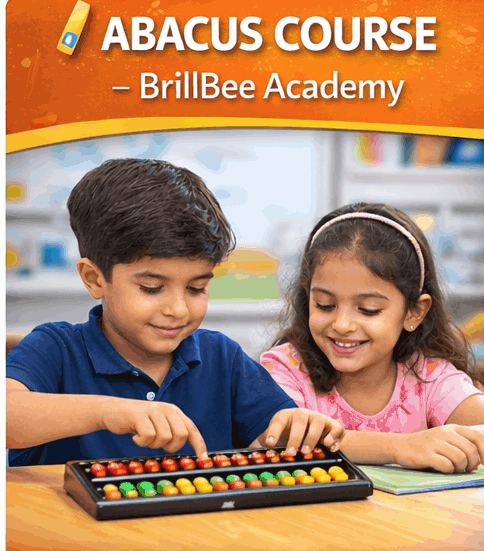
Visual, tactile learning bridges gaps that traditional methods miss
Has your child been labelled “slow” or “behind” in math?
That label crushes confidence. But the truth is, many slow learners just need a different method — one that doesn’t rely on abstract symbols.
Here’s the promise: You’ll discover why abacus is often the breakthrough that traditional tutoring cannot provide.
Director & Lead Abacus Trainer | Mission Abacus Pvt. Ltd.
10+ years experience | 5000+ students & teachers trained
📍 Mission Abacus Pvt. Ltd. — Jaipur, India
🌐 Website: missionabacus.in
📞 WhatsApp: +91 96641 11853
🧩 Why Abacus Works for Slow Learners
Traditional math relies heavily on working memory and abstract symbols — both challenging for slow learners. Abacus replaces abstract numbers with concrete beads.

I’ve worked with children who repeated the same grade twice. After switching to abacus, they not only caught up but began to enjoy math. The secret? Removing the fear of “getting it wrong.”
🎯 Adapting Abacus for Slow Learners
Go slower: Spend 2‑3 weeks on bead identification. No timers: Speed comes later. Celebrate every correct answer: Builds self‑belief. Use larger abacus: Easier to see and move. Short sessions: 10 minutes, twice daily.
💡 A Success Story
A 9‑year‑old boy, Vikas, was labeled “learning disabled” in math. His mother was desperate. After 6 months of gentle abacus, he solved his first mental sum. His teacher called home: “Vikas raised his hand today.” That moment changed his school life forever.
You might wonder, “Will this work for my child?” Every child is different, but the multisensory nature of abacus works for a wide range of learning differences. Start with a free demo and see.
❓ FAQ — Abacus for Slow Learners
At what age can a slow learner start abacus?
Typically 6‑8 years. But older children also benefit. The key is readiness to sit for 5‑10 minutes.
How long before I see progress?
Small wins appear in 2‑3 months. Significant math confidence may take 6‑9 months. Patience is essential.
Should I tell the teacher about my child’s learning pace?
Yes — a good teacher will adapt. One‑on‑one sessions are ideal for slow learners.
Can abacus help if my child also has low IQ?
Abacus builds functional skills, not IQ. Many children with intellectual challenges learn abacus at their own pace and gain confidence.
Is online abacus suitable for slow learners?
Only if the teacher is very patient and the child can focus on screen. Offline is often better for hands‑on correction.
What if my child forgets what they learned?
That’s normal. Repetition is key. Abacus is designed for spaced repetition. Don’t worry — the brain eventually retains.
My child cries when I mention math — should I still try abacus?
Yes, but start with pure play: “Let’s just move beads, no sums.” Remove all pressure. When the fear subsides, introduce simple counting.
✨ Every child can learn math — at their own pace.
Give your child a method that works with their brain.
📲 Book a slow‑learner consultation →Limited one‑on‑one slots
Director & Lead Abacus Trainer | Mission Abacus Pvt. Ltd.
10+ years experience | 5000+ students & teachers trained
📍 Mission Abacus Pvt. Ltd. — Jaipur, India
🌐 Website: missionabacus.in
📞 WhatsApp: +91 96641 11853